
Table of Contents
The rise of sports betting in the United States has resulted in plenty of fallout most failed to predict. Some of it’s good, such as the increased interest people take in live sports. Some of it’s bad, such as the impact sports betting potentially has on money-saving habits. And some of it is, well, just bizarre—definitely not, potentially good, but certainly not something most experts forecasted.
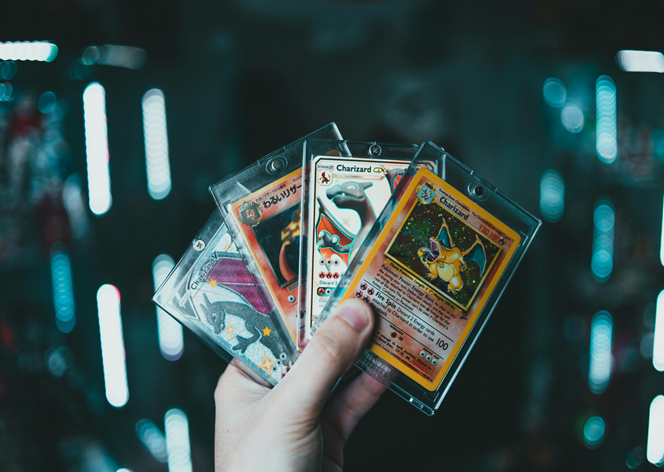
The increased value of trading cards and collectible card games (Pokemon, One Piece, etc.) falls under the latter umbrella.
Ever since the Supreme Court of the United States overturned the Professional and Amateur Sports Protection Act, markets have shown a rise in collectible-card-game and trading-card activity, as well as an upsurge of value on many of them. Upon first consideration, this seems…bonkers. The proliferation of sports betting can be linked to many things. It makes sense, for instance, that pro-franchise values in The Golden State are on the meteoric come-up when you look at the amount of customers engaging with the best California sports betting apps, even as the state tries to determine its legalization future.
But trading cards? And collectible card games? It is much harder to see the link here. Rest assured, though, there is absolutely a connection.
Why the Value of Sports Cards are on the Rise
As sports betting in the United States has become more common, there is an increased emphasis on marketing sports and telling stories around them in general. Basically, the dissemination of sports is at an all-time high.
Consider the current docuseries climate across virtually every streaming service. There are a plethora of options, from historical lookbacks to real-time chroniclings of certain teams or athletes. As more people consume these, a brighter spotlight is being shined on everything and anything that has to do with sports.
This shift is often traced back to the global pandemic. That’s mostly true. People had more time on their hands when stuck at home. That prompted them to binge-watch, well, basically everything. But the global pandemic also came at a time as legal sports betting in the United States was just becoming more mainstream. Remember, PAPSA was overturned by SCOTUS in 2018. The world will shut down in 2020, not even two years after.
While there was a lull in trading-card values at the start of the pandemic, the mass consumption of sports helped bring it back. As Geoff Wilson, founder of Sports Card Investor, told Forbes’ Josh Wilson:
“Everything changed after about three weeks, and suddenly, sports cards became popular at a rate never seen before and one that we may never see again. This was because of a confluence of two factors, one being that people were stuck at home bored and looking for a hobby. For many Americans, sports cards were the perfect thing because they reconnected them to their childhood. The second thing was ESPN's release of the documentary, The Last Dance, which chronicled Michael Jordan's life, the Chicago Bulls, and their championships in the 1990s.”
Interestingly enough, as many experts will tell you, the sports-card market has settled. But it remains frothier relative to its pre-sports-betting levels. That can’t purely be a coincidence.
The Value of Collectible Card Games is Following Suit
This trend has spilled over to the collectible-card-game industry. Interest in these activities was also fueled by the pandemic. But its staying power has a lot to do with the growing popularity of Esports, and the betting industry around it.
Indeed, you may not be able to imagine a One Game tournament being broadcast live to millions of views. At one point, though, you would have said the same thing about Counterstrike, Dota 2, League of Legends, etc.
The landscape of competitive gaming is forever changing. It is no longer about just celebrating hyper-athletic feats. It is also about emphasizing the mental and creative elements of competition. And yes, it’s about access, too. For many, partaking in virtual sports or a card game is far more realistic than competing on the field. Heck, for a bunch of people, it’s bound to be more appealing in an increasingly remote world.
Older generations might scoff at the notion. But there’s a reason why certain One Piece cards have actually sold for thousands of dollars. It has nothing to do with luck. It’s not a blip on the radar. It speaks to, at minimum, a growing trend in the gaming industry, across all platforms and mediums.
The question is no longer whether it’s legitimate. It’s whether this shift has the same kind of staying power we’ve seen from live sports, and even Esports.