
Table of Contents
The rapid ascent of the One Piece Card Game has created a unique ecosystem where supply shortages and a passionate player base have collided, sparking a significant debate regarding the role of digital gameplay. Since its launch, the physical card game has faced immense demand, often leaving shelves empty and driving secondary market prices to uncomfortable highs. For many enthusiasts, the inability to purchase starter decks or booster packs at retail price has forced a migration toward digital alternatives, fundamentally changing how the community interacts with the game.
Unofficial Clients Offer Instant Access To Competitive Practice
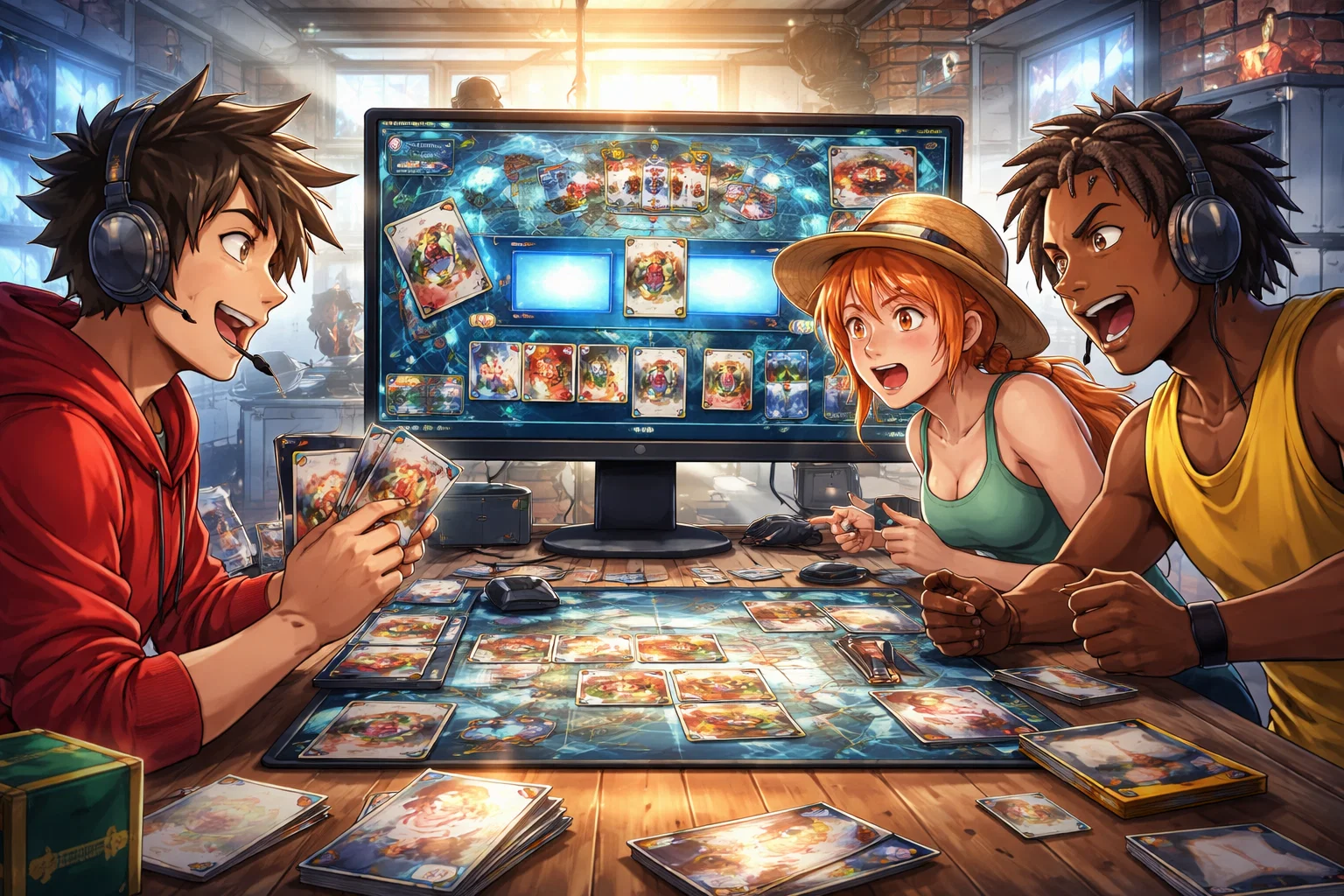
The primary driver behind the digital migration is the need for efficient, accessible practice environments. Unofficial simulators have become the testing ground for the vast majority of competitive players. These platforms allow users to build any deck instantly without spending hundreds of dollars on physical singles. This accessibility democratizes the game, allowing skill to take precedence over budget. A player can test a niche strategy or a top-tier meta deck with zero financial risk, iterating on their build dozens of times in a single evening.
This drive for immediacy is a defining characteristic of modern digital entertainment. Players are increasingly rejecting platforms that require cumbersome setups, long downloads, or invasive data collection before they can engage with the core activity. This preference for streamlined access mirrors trends seen across the broader gaming landscape, where users gravitate toward no registration casino sites that allow for immediate play without the friction of account creation forms. In the TCG world, this manifests as players choosing lightweight simulators that require nothing more than a simple download and a deck file to begin matchmaking.
The most popular of these tools, often referred to as "sims," automate the complex rules of the One Piece Card Game. Unlike manual sandbox environments where players must move cards themselves, automated clients handle phase transitions, power calculations, and effect resolutions. This automation is crucial for competitive integrity during practice. It prevents illegal plays and teaches newer players the intricate timing of specific interactions. Consequently, these unofficial clients have become the de facto standard for tournament preparation, creating a scenario where the highest level of play is often developed on software that technically shouldn't exist.
Bandai Namco Addresses Digital Rights And Future Plans
The existence of these unauthorized simulators places the publisher, Bandai Namco, in a complicated position regarding intellectual property and brand management. Officially, the company encourages new players to learn the basics through their authorized channels. They have released the Teaching App Browser Version, a limited digital experience designed to introduce the core mechanics of the game to beginners. However, this official tool is restricted in scope, offering only a handful of starter deck matchups and lacking the full card library or multiplayer capabilities required by the veteran community.
This gap between the official offering and community needs has created a "grey market" of digital gameplay. Bandai Namco is undoubtedly aware that a significant portion of their player base relies on third-party tools to remain engaged with the product. The risk for the publisher is two-fold: cracking down on simulators could alienate the competitive scene and stifle the game's growth, yet allowing them to flourish unchecked might devalue their physical product. If players can enjoy the full game for free online, the incentive to purchase physical booster boxes could theoretically diminish, although current sales data suggests the appetite for physical collecting remains voracious.
Industry observers often point to other major card games that have successfully launched full-featured official clients. These official digital versions often monetize through microtransactions, providing a revenue stream that complements physical sales rather than cannibalizing them. The One Piece TCG community frequently speculates on whether a similar "Master Duel" style client is in development. Until such a platform is announced, the tension remains: players are using tools that infringe on IP rights because no official alternative provides the comprehensive competitive environment they require.
Players Prioritize Speed And Accessibility In Gaming Platforms
For the competitive grinder, the choice between physical and digital play often comes down to pure mathematics and time management. Shuffling a physical deck, setting up a playmat, and resolving complex board states manually takes time. In a digital environment, a game that might take 30 minutes in a local game store can be completed in 10 to 15 minutes. This efficiency allows serious competitors to play significantly more matches per hour, accelerating their learning curve and allowing them to solve the "meta" much faster than was possible in the pre-digital era.
The impact of this high-volume data generation is evident in how quickly tournament trends shift. Online tournaments now generate massive datasets that players use to refine their strategies before major physical events. For example, data from a PPG Online Regional statistics breakdown revealed a metagame heavily skewed toward Green decks, which comprised over 53% of the field. This level of granular insight allows players to tech their decks against specific threats days or weeks before they encounter them in real life, creating a feedback loop where online play dictates physical tournament results.
Furthermore, the accessibility of simulators removes the geographic barriers that traditionally limited TCG growth. Players in rural areas or regions without a strong local game store scene can now compete against top-tier opponents from around the world. This global connectivity has raised the overall skill ceiling of the player base. You no longer need to live in a major metropolitan hub to practice against the best; you simply need a stable internet connection. This accessibility has transformed the One Piece TCG from a local hobby into a global esport, driven largely by the very simulators that exist in legal limbo.
Balancing Physical Collections With Online Gameplay Convenience
Despite the undeniable utility of online simulators, the physical card game retains a "soul" that digital clients cannot replicate. There is a tangible weight to placing a high-rarity Leader card on the table that a pixelated image on a screen can never match. The social aspect of trading card games—the pre-tournament chatter, the trading of cards between rounds, and the physical act of shaking an opponent's hand—remains the bedrock of the community. For many, the simulator is merely a means to an end, a tool to sharpen skills that will eventually be displayed at a convention center or local shop.
The ideal future for the One Piece Card Game likely involves a hybrid model where digital and physical play support one another. We are already seeing this in how content creators use simulators to showcase new decks, which in turn drives hype and sales for the physical product. When a YouTuber demonstrates a powerful combo online, the prices of those specific cards often spike on the secondary market the next day. This correlation suggests that digital play acts as a marketing engine for the physical game, rather than a replacement.
Ultimately, the debate is not about one format extinguishing the other, but about how they coexist. As the game enters its next phase of growth, the community has largely accepted that digital play is essential for competitive viability, while physical collection remains the ultimate expression of fandom. The challenge for Bandai Namco will be to bridge this gap, perhaps by creating an official digital client that rewards physical collectors, ensuring that the convenience of the screen doesn't erode the magic of the cardboard.